From Kitchen Table to Solana
What I’ve learned turning an idea into a game.
It’s April 2024. I’m on paternity leave, helping my wife with our three-week-old son. My day job is co-founder of a prop trading firm, and the company is doing well.
One afternoon my son falls asleep, then his mother, and I have a moment for myself. I spend it the way I always do: playing card games. Some would call me unfaithful. I’ve never been satisfied with one game. Poker, Magic, Hearthstone, and plenty of others.
That day I’m trying Parallel, the game that was supposed to make Web3 games great and bring blockchain to regular gamers. I’ll put it softly: I was disappointed. It felt like a Hearthstone clone, and it was so laggy my high-end gaming PC sounded like it was about to take off.
I thought Web3 games deserved better. I wanted to build one.
I became obsessed. I thought about it day and night, but I couldn’t figure out what the game should look like.
A few days later I had another free moment and registered for an online Texas Hold’em tournament. I was doing well. Two hours in, still alive, I realized my wife needed me and I just abandoned the tourney.
I was frustrated with my time management, but it gave me the idea. I love poker. I just want a version with a predictable length and some new elements.
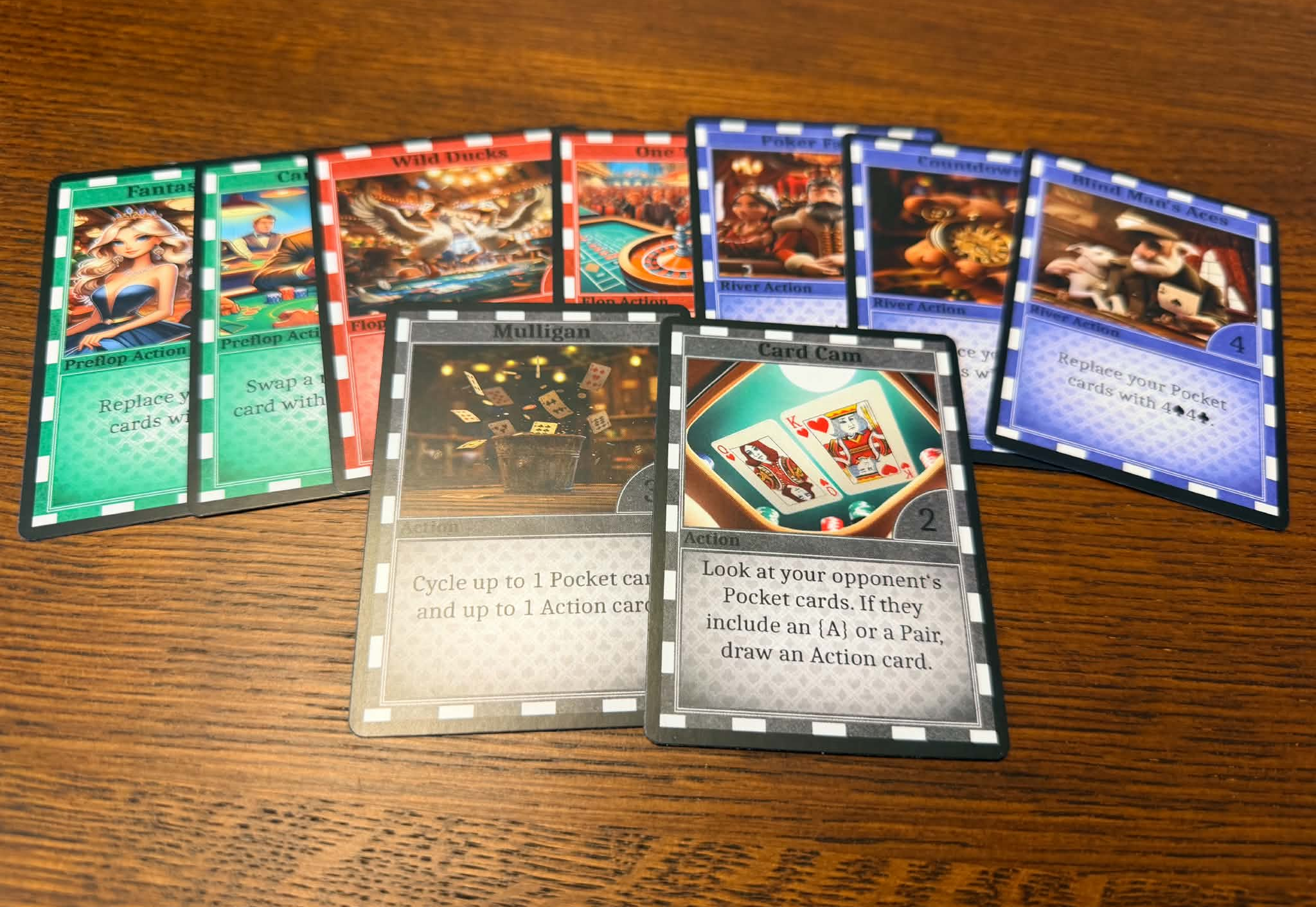
Over the next few days I turned that into real rules and real cards, and showed it to my best friend Jan, a former professional poker player. He liked it. We built the first version together, and in June we invited eight friends to a tournament at our kitchen table.
One of them was Ondrej Strasky, a professional Magic player. His feedback: “I don’t play much poker, and it’s confusing to figure out when you can bet. Get rid of it.”
He had a point. A great game has to be deep, but simple enough that you could teach your grandmother. We replaced betting with points on action cards and the game got 100% better. The same day, Ondrej became our co-founder.
Jan spent the summer coding the first demo. I still had duties at the trading firm, and on top of that I was looking for our first investor. At the end of summer we signed with Miton, a Czech incubator, and the hobby project became a real thing.
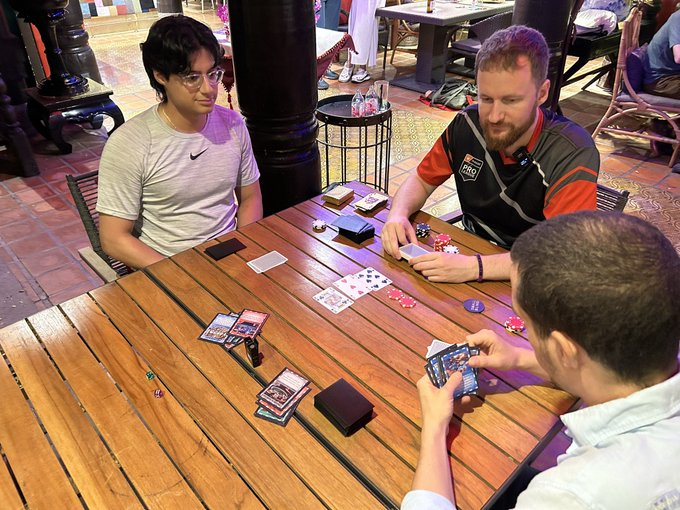
While the digital version was being built, we played the paper one everywhere we went. We carried a deck of printed cards and a box of chips all over the world, from Thailand to Denver, and put it in front of anyone who would sit down: poker pros, Magic players, friends of friends who had never played either. Every trip came back with a rule changed or a card cut.
It took another nine months to deliver the Alpha, and they were the hardest of the whole journey.
Halfway through, I had to admit that our first CTO and the game were not a match. The game simply wasn’t getting built. Replacing the person responsible for your entire product, months before launch, with no backup plan, is the loneliest decision I’ve made as a founder.
Then we found Artem. He had recently moved to Prague from Ukraine because of the war, and he had shipped card games before. He rebuilt the Alpha almost single-handedly, and the shape Showdown has today is mainly his work.
Around the same time I had to leave the trading firm. There was no way to do both well. I loved that job and I was sad to leave it, but Showdown wasn’t going to succeed with half of me.
In April 2025 I learned my first lesson the hard way. Ondrej and I both had an audience from our competitive days, and basically nobody cared that they could play a new game we made. Most of the people who cheered for us when we competed never tried Showdown. Not a single game.
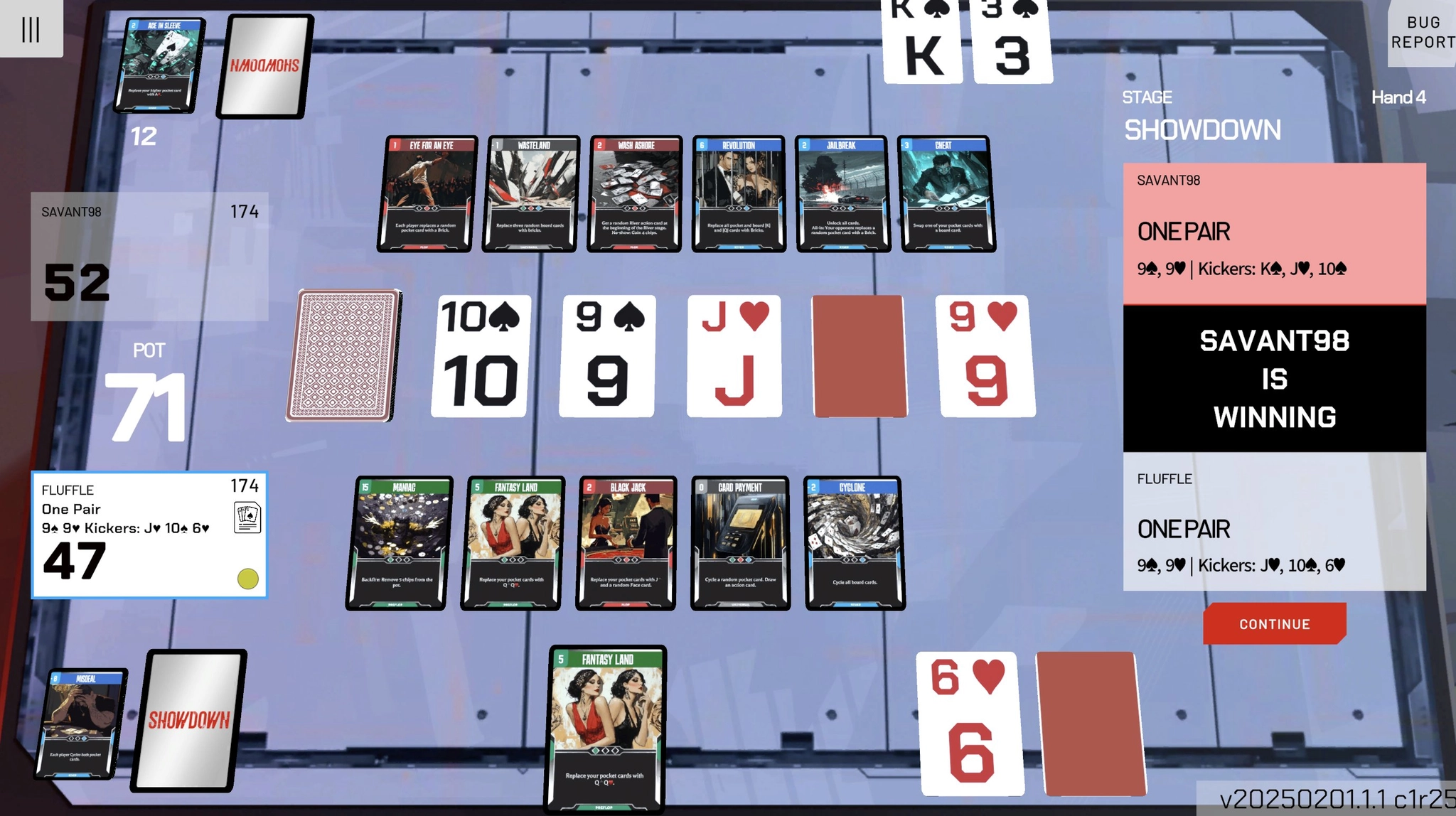
Back then it surprised me. Today it makes perfect sense. Why try a new game with mediocre graphics and a rough client when your favorite game is finished and waiting?
But there were good signs too. The players who gave it a chance got hooked. Average play time climbed every month, and a year later it was over 90 minutes a day.
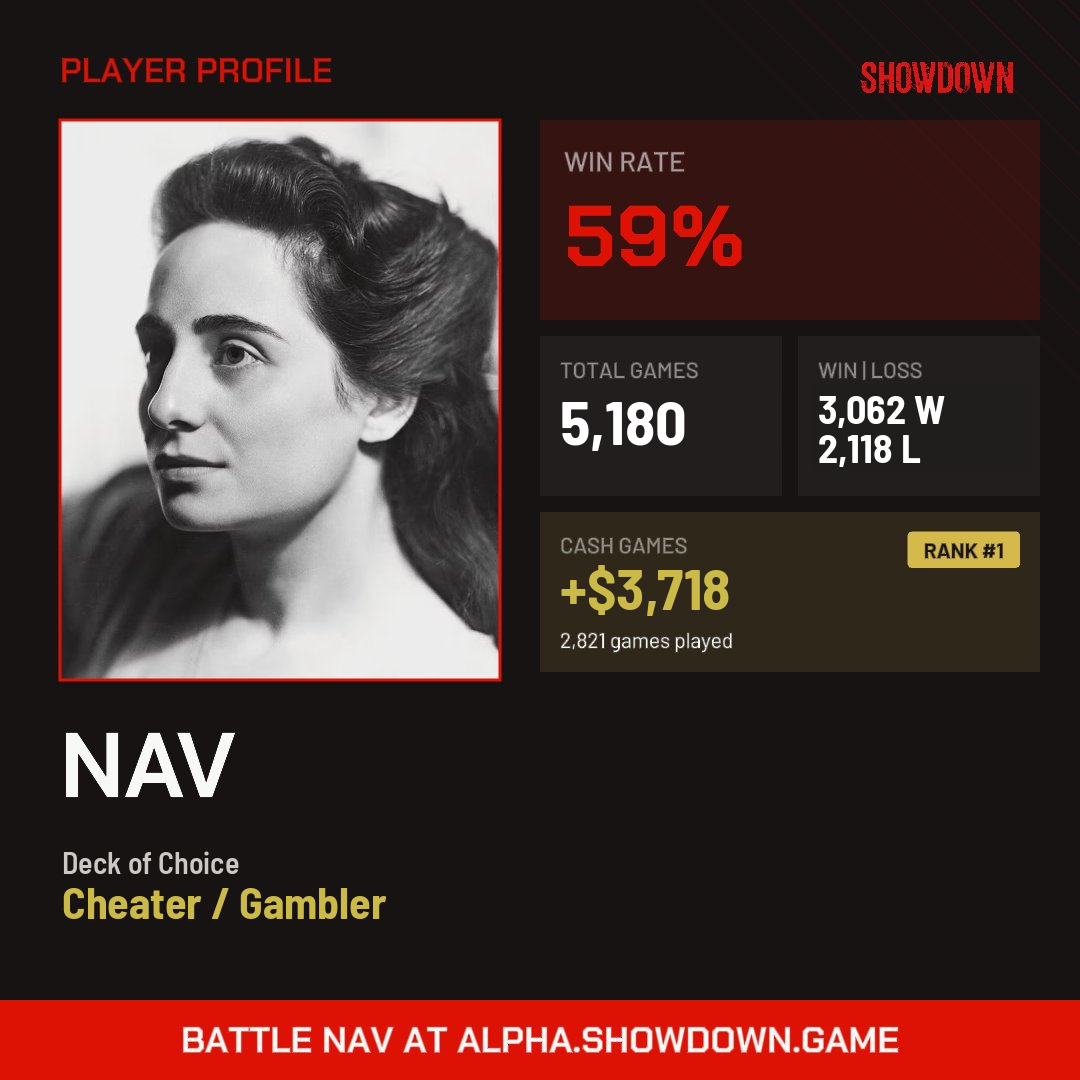
Take NAV. A year ago we had never heard of each other. Since then he has played more than 5,000 games of Showdown, over 1,000 hours, and finished Alpha as the number one cash game player. In the last three months alone, he won $3,718 in cash games. Nobody asked him to. He just kept coming back.
In those twelve months we built real-money matches and real-money tournaments. More than 5,000 players tried Showdown and we reached 1,600 monthly active users.
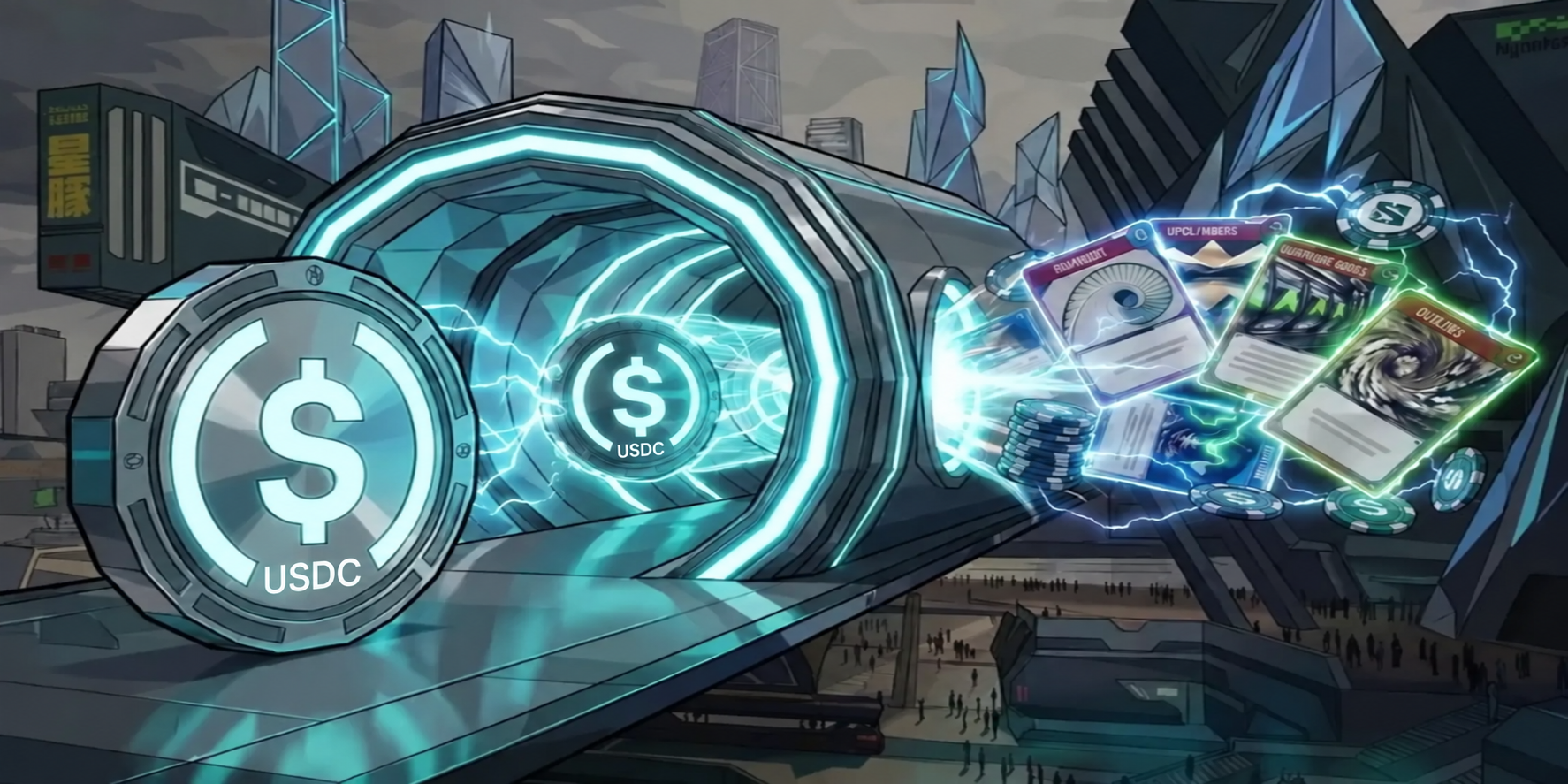
We were settling everything on MegaETH with USDM. But I realized that if Showdown was going to be a mainstream game, we needed a bigger, more user-friendly chain. It was another very hard decision. We were deeply connected to the MegaETH community.
In June this year the Solana and WSOP partnership was announced, and the dots started connecting. Moving from an Ethereum chain to Solana is not a small thing. Different programming language, every smart contract rewritten from scratch. But it felt right, and one call with Vibhu, the person behind the Solana x WSOP partnership, cleared the last doubts. I’ve never seen energy and willingness to help like I’ve seen from the Solana Foundation.
Am I worried about launching in a few days? Hell yes. Many of our most active players found Showdown through MegaETH, and I don’t know how many of them will follow us to Solana. And I don’t know how we’ll stand against the other great apps there.
But I know Showdown is in the best shape it’s ever been in.

I know it’s a big ask. But play one game. Ten minutes. If it isn’t for you, I’d still like to know why, so write to me. And if it is for you, I’ll see you at the table.
.png)